Monday, 27 August 2007

Chris Trotter: No Left Turn

We listened to a Radio New Zealand Kim Hill interview with Chris Trotter, author of "No Left Turn". Some of us wanted to turn closer to home and to attempt to integrate some of the thinking that went on last week about aid and self -interest in a New Zealand context. We wondered if Chris Trotter would provide a starting point for a dialogue national issues.

"While the successes of those who came to this shore in search of power and wealth remain locked in bitter conflict with those who came in search of equality and justice, nothing of enduring worth can be constructed in this country." We found Chris Trotter's framing of political life as a battle between right and left a little simplistic and outdated. But we were inspired by his stories of the working class engagement with ideas and political awareness in thirties New Zealand. That voter turnout was 92 percent in the 1930's compared to 77 percent in 2005. We remembered how in earlier years New Zealanders had a strong record of sorting out their own social problems at a community level. For instance kindergartens, worker's libraries, Ironsides (mobility transport) were all community level initiatives. We recognised that the new underclass was not working. We wondered what it would take to change this class from being beneficiaries of welfare to becoming participants in a democracy. How could this most under-represented group be given a voice.

The work of Michael Young on the dangers of organising society on the basis of meritocracy was mentioned. Social mobility uploaded the most intelligent and articulate of the working classes into the ranks of the middle class where they are easily distracted by individualistic consumption and become alienated and therefore fail to represent their working class roots. This ensured that the system doesn't have to change since the ideology and hope is that the best of the poor rise up through the system. Then poverty could be seen as the fault of the poor....if you worked harder or had more talent you wouldn't be poor.

We asked ourselves if left or right labels were still relevant in political commentators since the turn of the NZ Labour party to the right in the mid 1980's. We wondered when does the right to pursue individual freedom turn into the right to exploit others for our own pecuniary gain? We decided that keeping 80% of the population relatively happy meant there was a significant vested interest in keeping things the way they are and made structural systemic change very difficult. If society cared about the whole 100% there would be changes made to housing, health and employment and perhaps our child abuse statistics might improve.

We finished with thinking about the value of ideas versus ideologies. Trotter's arguments are passionate and powerful but he engages in analysis of the past rather than in designing the future. We would like to ask him what kind of a future he would design? Encourage him to be generative.

We concluded that the TED talks had served us well since they present ideas rather than ideologies; there is space left to consider these ideas as ideas; they inspire and therefore create hope. De Bono was quoted from the Knowledge Wave conference. "Analyze the past. Design the future." I wanted to play Dudley Benson: It's Akaroa's Fault video from Youtube.
Lynne

Nicky Hager reviews Chris Trotter's "No Left Turn" in the August 25th 2007 Listener and you can read the review here

We finished by listening to Trinity Roots play Aotearoa from their Home, Land and Sea album.

Jacqueline Novogratz: Investing in Africa's own solutions


Here we were listening to Jacqueline Novogratz's plea for a chapter two to the End Poverty campaign of the G8 forum. Her chapter two is about the how to and the effectiveness of aid delivery. How to build viable systems on the ground that deliver critical and affordable goods and services to the poor which are financially sustainable and scalable.

We became very interested in her idea of scaling successful systems up and down. We could all think of resources spent on good intentions that had been absurdly useless in delivery, aid from a great height and delivered from the paradigm of the giver, without conversation or direction from the receiver. We thought about this in terms of community work: how to get people to step up: what do you want for yourselves and your children? How do you want to use these resources to be used? What are the businesses that could emerge from this set of needs?

We described this as a movement from the beneficiary approach to the participatory approach. It would cost less in the long term and would not create a class of professional helpers. One of our group had some examples of local social entrepreneurs coming up with creative and startling solutions in partnership with local people.

We then went on with a really engaging question of the place of self-interest in systems. When does enough resources become enough for us? When does getting and spending become a kind of addiction?

What could be achieved if community and social agencies developed better collaboration? Sought to solve social problems rather than organize them? One of us suggested that 805 of New Zealanders get their needs met and the other 20% miss out and get blamed for it. What if outcomes were adjusted to include the whole 100% of New Zealanders, having their housing needs, the education and health needs met. What if public servants saw themselves as paid to steward these outcomes? We create professionals to "help" our poor so we don't have to feel responsible or change our lifestyles. How could we create a system which changes beneficiaries to participants and releases creative responses to entrenched social system?

Tuesday, 14 August 2007

New ChangeMakers Slideshow on Website


Gidday all

I have just completed an updated version of the ChangeMakers slideshow, and have now put it up onto the Slideshare website which converts PowerPoint presentations into flash files that you can imbed into your blogs!

So if you go to the national website on www.changemakers.org.nz

you can view the slideshow from there as a way of sharing the ideas behind our groups.

Monday, 13 August 2007

5-10-5-10 Changemaking

We met for a 5-10-5-10 evening listening to Bob Dylan’s “I Shall Be Released” performed by Jack Johnson (with the Animal Liberation Orchestra) from the album “Endless Highway – the music of The Band” (2007). Each of us visited a highlight from the week: these included appreciation of Louise Nicholas at last finding some justice re. the suppression of evidence in the earlier trials; a good case being put to council for the interest of pedestrians and cyclists in local roading decision making; a wonderful week spent in wananga in Tauhara.

We decided to check in with progress on our 10 goals, and we also reviewed the format of our evenings and discussed the place of the 20 minute videos. We thought they were great for generating dialogue from us and also for keeping us aware of big picture thinking and the interconnectedness of work for the common good. Some of us felt there was less focus on our actual 5-10-5-10 projects this year and others reported doing a lot more for their projects than in previous years. It was generally agreed that the group was functioning well as a place to find inspiration, feel connection and think together.

We heard about the activity of the national trust of Changemakers and the establishment of the national coordinator position. We need to attract more funding to make this position sustainable and we hope to generate more Taranaki contributions to this fund. If you as a reader are interested in contributing funds you can go to the Changemakers website or you can download the bank deposit details. Nationally there are a number of people wanting to start 5-10-5-10 groups and there is a lot of potential for this position to inspire change-making and even attract funding for social entrepreneurship projects. It is hoped to make this a young-person's position so we can encourage and educate the next generation of change-makers.

We also looked at and discussed this blog: the editing that needs doing to get it ready to go public; its role as a window into a local Changemaker group, the variety of issues we discuss and the types of work we are engaged in. We hope other Taranaki Changemakers might contribute a blog post on your projects and the progress you are making and what you are learning from the work you are doing. It would be great to see some local stories as well as the videos and our responses to them.

We talked about the future of Changemakers, the desire we have to engage other people and to find a way to include them and to transition from this group to the next one. One interesting suggestion was to finish our group with a weekend which could also function as an introduction weekend for the next group. We had in mind workshops on our local projects as well as perhaps revisiting the videos we found most compelling and useful. We thought perhaps a shorter group of maybe 6 sessions could be something that new comers might commit to more easily.

Endless Highway: The Music of the Band featuring Jack Johnson is available from Amazon

Sunday, 12 August 2007

Presencing Institute: Website launch

The Presencing Institute (PI) website has just been launched. The Presence Institute people describe the purpose of the website "is to feature ongoing action research and practical applications of the U process and other related methods and tools as well as to link practitioners and researchers that collectively advance these social technologies. Each month the site will feature a new project."

As well as links to the Presencing Institutes resources the site also features upcoming events, online courses and on-going projects.

You can visit the Presencing Institute site at www.presencing.com

Graeme: Changemaker projects


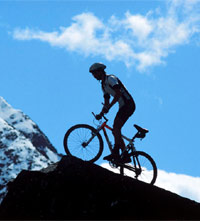
A lot of my projects relate to either cycling or mountain biking but there are a few personal ones too.

Cycling Advocates' Network (CAN) Executive work:
As part of being on the CAN executive, I have been given the responsibility for facilitating groups of interested people in writing up specific cycling related policies that are acceptable to the majority of CAN members. I have an aim of getting 5 new ones written before the end of 2007.

In addition I have an ongoing goal of being an effective member of the executive and contributing to the running of the network - it has one full time employee based in Wellington and two part time employees, one in Christchurch and the other in Auckland.

North Taranaki Cycling Advocates(NTCA)local committee work:
I am the chairperson for the local cycling advocacy group NTCA. We have a committee of 7 active members along with a wider group of people interested in cycling issues that numbers around 80.

My projects are:
Assit the Taranaki Regional Council with the development of its Regional Walkways and Cycleways Strategy. This was officially accepted by the TRC in July.

Assist the NPDC with the development of its revised Cycling Strategy. This was officially accepted at the last meeting of the full council on August 28th.

Sustain the NTCA committee and grow the number of active people willing to be on the committee. Have some fun together too! This is still work in progress!

Develop a NTCA website. Not yet done.

Facilitate one other from NTCA to attend the NZ Cycling Conference in Napier at the beginning of November. Work in progress.

New Plymouth Mountain Bikers committee work:
My official title is "Club Captain" but no one really knows what that means. So I am just an active member on the committee.

My projects are:
Organise and set up MTB skills courses for June and November. I applied to the TSB Community Trust for funding to run these courses and got a grant of $4000 in March. I then used the grant to heavily subsidise the courses. I arranged for MTB tutors to come down from Rotorua for the weekend to run them and develop the MTB skills of local riders.

The one in June was great and we had 16 people attend either on the Saturday or the Sunday. Still have to do some more promotion for the ones in November.

Develop more offroad tracks in the Mangamahoe forest MTB park. Parts of the park will be logged in the near future and where there are currently tracks, these will be gone when the logging is carried out. Have run two working bees in the past few months and there will be another shortly.

Club website developed. An ongoing project: www.taranakimtb.co.nz

Mapping of the MTB tracks and making the maps available online. Check out the website.

Club membership growth. Have used the skills courses as a way of increasing the numbers by also using the TSB grant to reduce the cost of club membership for their first year.

Structural engineering work:
I had a goal from a couple of years ago to publish a paper on how the current Structural Design Actions standard could be adopted for the use in the design of industrial structures.

The SDA standard is very orientated towards buildings that people live, shop and work in whereas the industrial structure is very much about supporting items that modify something usually under pressure. So I blithely started writing it up and it grew and grew. I presented a shortened version of it at the NZ Society of Earthquake Engineering (NZSEE)technical conference in Napier last year to see how it went down. Most of the adaption of the SDA is to do with the earthquake provisions.

I eventually got a draft off to the editor of the NZSEE technical bulletin in February of this year for review. He came back with +ve noises and I got the completed version off in May. It has been peer reviewed, accepted and is due to be published in the next edition of the bulletin. Hopefully it will be out this month sometime. What a labour of love!

Personal Projects:
I have some personal projects to do with spending more time developing my digital darkroom and photography skills. Some of this was to become more acquainted with Photoshop, the scanner we have plus the colour printer. To do this I try and take some time off work each month so I can do this without interuption.

Judging by the crap photos I took of the eclipse of the moon the other night, I need to go back to school re the digital camera.

Monday, 6 August 2007

Barry Schwartz: The Paradox of Choice


There were four of us in the garage for Barry Schwartz. At first the ideas seemed very familiar and consequently not very challenging. A psychological attack on capitalism and the free reign of individualism present in consumerism, the personal growth movement, more choice is more fun.

Then we started sharing stories of our frustrating forays into buying domestic items and how time consuming this could become when there were so many choices to make. We then got interested in “how” we choose and discovered a range of responses to the overwhelming aspects of choosing. Some made the first choice that looked like it might fit the bill in order to avoid the time-waste, others got very fine tuned into fitting their needs to the what was on offer, others used trusted friends or colleagues as a source of advice and just did what they did. Ask someone under 25 and a bit geeky to find out what virus protection you should put on your computer. A sort of delegation of the task of sorting the information in the ocean to someone who knows how to surf it.

We kept wondering how people choose and talked about desire and its infinite varieties and how connecting with our values helped limit the scope of our choosing, is this OK for me, for my family, for other humans, the species, the planet. One of us described how finding out about the lives of coffee-growers helped make it easy to buy coffee. She would always choose the fair trade variety and this made the process simpler.

I wondered about levels of choosing: a kind of reptilian response to our environment (if it looks good I'll eat it and as much of it as I can before someonelse gets there); a mammalian response (this is for my mate, me and our offspring, and possible the pack); a human response ( how can I best use this resource balancing the needs of myself, my loved ones and those I know who need it?); a change maker response ( how does this resource become sustainable managed and used to for the common good and to create systemic change in the whole system?)

Later I wondered if we could have thought about this more in relationship to Changemakers itself. How we choose our projects or the individuals and groups we support through financial encouragement.

We finished looking forward to our next meeting which is a 5-10-5-10 meeting.


Sunday, 5 August 2007

Rives: A mockingbird remix of TED2006


Rives recaps memorable moments of TED2006 in a fantastical Mockingbird lullaby. Mixing the personal with the universal in free-spirited rhyming verse, he imagines using mockingbirds to redistribute the world's underappreciated sounds. "They listen and mimic and remix what they like / they rock the mic."

I chose this poem rather than a song tonight because I believe it represents some of what we are doing with our Monday night ChangeMakers - taking our own Mockingbirds out in to our worlds.